
October 2019 California Delegation to Mexico City Led by Lt. Governor Eleni Kounalakis
Home
Home/Introduction

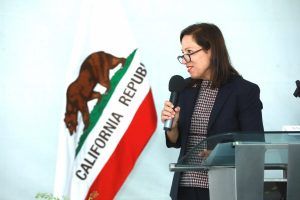
From October 1-4, 2019 a delegation of California business and state agencies led by Lieutenant Governor Ambassador Eleni Kounalakis traveled to Mexico City for a trade mission to advance business, collaboration and partnership between California and Mexico. The delegation was made up of 20 private sector leaders from the agriculture, energy, and clean-technology sectors, as well as approximately 20 representatives from an array of state agencies.
The objectives of the mission were to:
- Reaffirm and strengthen California’s friendship and commercial relationship with Mexico, and to lay the foundation for the Newsom Administration’s ongoing and robust engagement in the future;
- Open California’s Trade and Service Desk in Mexico City;
- Engage in dialogue among government officials and the private sector on topics and solutions important to both Mexico and California in the areas of energy, climate, agriculture, water, sustainability, migration and resiliency.
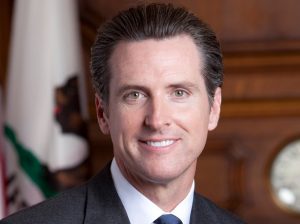
This is the first international mission of the Newsom administration, which also coincides with the beginning of the administration of President Andres Manuel Lopez Obrador in Mexico. President Lopez Obrador took office on December 1, 2018 and California Governor Gavin Newsom attended the inauguration.
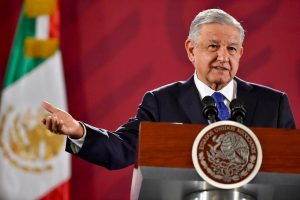
President Lopez Obrador’s vision for Mexico includes eliminating high-level corruption among the Mexican political elite and halting the escalating criminal violence that is seen to be plaguing the country. AMLO has also vowed to address the rising disenchantment people have with Mexico’s unequal growth and income inequality, to empower the country’s many underprivileged citizens who have been underserved in the past, and to strengthen public safety and bolster the rule of law.
| “I walked away from the delegation to Mexico City inspired – our group had incredible energy and drive to collaborate and partner with our Mexican neighbors to solve some of the most difficult issues facing our countries. The exposure to a wide variety of high level government officials and business representatives from both countries was illuminating. Our delegation included an impressively diverse mix of public and private sector representatives and the time spent together has continued to add value well beyond the trip.”
Jennifer Haley, President, Kern Energy |
Special Thanks To
Key California-Mexico Points as Outlined By Delegation Leader Lt. Governor Eleni Kounalakis
We are very excited to be visiting Mexico City and grateful to be meeting with you, as we consider Mexico to be our closest and most important partner in many areas. The fact that our delegation includes several state agency heads, members of our legislative branch, and key business leaders — and that this is my first official international delegation — demonstrates the importance we attach to this critical relationship.
Our goal is to reaffirm and strengthen California’s commitment to the deep friendship and significant commercial engagement we already share with Mexico, to determine how we can make our partnership even more effective and beneficial, and to lay the foundation for the Newsom Administration to build ongoing, robust engagement with our Mexican friends and partners.
California and Mexico have always been inextricably intertwined. And we always will be. We may be separated by a land border drawn on the map, but our histories, our cultures, our fundamental values, and increasingly our people, share commonalities that join us together.
We share a 145-mile border which last year was crossed by 17.7 million pedestrians, 32 million personal vehicles, and over 1.1 million commercial trucks. Every day, over $82 million worth of California goods make the journey across our border to Mexico. Mexico is California’s number one export market – California exports to Mexico amounted to $30.7 billion in 2018.
And that trade dynamic is reciprocal and interdependent: California imported $44 billion in goods from Mexico that same year. What’s more, Mexican investment into California provides job opportunities for thousands of Californians. In Southern California, for example, Mexican foreign-owned firms provide nearly 6,500 jobs at over 250 firms. This amounts to $426 million in estimated wages.
California is home to the largest number of people of Mexican origin in the United States. California has worked to integrate all foreign-born populations into the state’s social fabric, expanding access to education, employment, and health care. We will continue to do so as we seek economic opportunity and pathways for growth that are inclusive to all. We are proud of and grateful for the immeasurable contributions Mexican immigrants and their descendants have made to all aspects of California life.
We also share many of the same challenges. Whether it’s dealing with natural disasters, questions of air and water quality, the threat to our food supply and coastal regions posed by climate change, the scourge of drugs, crime, violence, and money-laundering, or the threats to the economic prosperity of our people caused by rising political tensions and market reactions, we need to be working together, hand-in-hand, to guarantee for the residents of our state and your country a safer, better, brighter future.
That is why we are so pleased to be signing Memoranda of Understanding during our visit. These agreements are the fruit of the hard work and cooperation of both of our teams, and they build upon firm foundations that have already been put in place by those that have come before us.
We hope that you are as excited as we are about the trajectory of our relationship, and we look forward to even closer and stronger collaboration in the future.
Key California-Mexico Issues
Energy
Climate has been a key area of focus of the Mexican government. Recent laws on climate change establish 10-, 20-, and 40-year goals. These include increasing electricity generated from clean sources up to 50% by 2050 and reducing greenhouse gas emissions by 30% by 2020.
The shared focus on energy in California and Mexico is a key area of collaboration. California and Mexico have a history of working together on renewable energy, cross-border resource management, and resiliency. California and Mexico share a commitment to continue to collaborate on these issues by working together on clean technology, biofuel, energy efficiency, and low-carbon energy.
Agriculture
In 2017, agriculture accounted for 3.6% of Mexico’s gross domestic product (GDP). Agriculture remains a key area of focus for Mexican policy makers. Mexico is also a top producer for agricultural goods imported by California. The Secretariat of Agriculture and Rural Development (SADER) and the California Department of Food and Agriculture (CDFA) are committed to work together to strengthen productivity, sustainability, and competitiveness in the agricultural sector.
Emergency Services
Given the shared border and common climate and geography in California and Mexico, the two neighbors are susceptible to shared natural disasters and disease epidemics. Therefore, both are committed to supporting one another in preventing or responding to these types of crises.
Economy
Mexico’s $2.4 trillion economy has become increasingly oriented toward manufacturing since the North American Free Trade Agreement (NAFTA) entered into force. Two-way goods trade between California and Mexico totaled $75 billion in 2018. Given the mutual benefit of this close economic relationship, California and Mexico aim to expand cooperation on trade and investment.
Trade Overview
Mexico is the United States’ third largest goods trading partner, with two-way goods trade of $611 billion in 2018. Mexico was the United States’ second largest export market, with a total value of $265 billion in goods exports in 2018, and is the second largest supplier of goods imports. Top export categories from the U.S. to Mexico included machinery, mineral fuels, vehicles, and plastics.
Trade with California
Mexico is California’s No. 1 export market, purchasing more than 17% of all California exports. California exports to Mexico amounted to more than $30 billion in 2018. Electrical machinery is California’s largest export, accounting for more than 25% of all California exports to Mexico. Other exports include vehicles, plastics, and medical instruments.
Mexico Trade
Mexico’s largest export and import partner is the United States. In 2017, Mexico exported $409 billion in goods and services; nearly 80% of this total went to the United States.
Mexico exports manufactured goods, electronics, vehicles, oil, silver, and plastics.
USMCA
The United States, Canada, and Mexico are in the process of renegotiating NAFTA. The new agreement, the United States-Mexico-Canada Agreement (USMCA), was signed on November 30, 2018 by President Donald Trump, Prime Minister Justin Trudeau of Canada and President Enrique Peña Nieto of Mexico. The agreement aims to promote balanced trade and growth in the North American economy. Mexico already has ratified the USMCA.
The U.S. Congress currently is considering approval of USMCA, and there are ongoing discussions and clarifications around labor, environmental and enforcement issues.
Trade Agreements
Mexico has free trade agreements with 52 countries, meaning more than 90% of trade is under an FTA.
Tourism
According to Visit California, more than 600,000 visitors came to California from Mexico by air in 2018, spending $733 million.
Press Releases
California and Mexico Ratify Agreement on Sustainable Agriculture
Office of Lt. Governor Eleni Kounalakis, October 4, 2019
California and Mexico Ratify Agreement to Expand Relations in Trade, Investment, Energy, and Environmental Policy
Office of Lt. Governor Eleni Kounalakis, October 4, 2019
California and Mexico City Reach Agreement on Clean Energy
Office of Lt. Governor Eleni Kounalakis, October 2, 2019
California Opens Trade and Services Desk in Mexico
Office of Lt. Governor Eleni Kounalakis, October 2, 2019
International Affairs and Trade Development Interagency Committee Heads to Mexico
Office of Lt. Governor Eleni Kounalakis, October, August 27, 2019
Memoranda of Understanding (MOUs)

Delegates
Delegates
For a complete list of all business and state delegates please click here.
Lt. Governor Eleni Kounalakis and Other Delegation Leaders
In February 2019, Governor Gavin Newsom issued an executive order naming Lt. Governor Eleni Kounalakis as the Governor’s Representative for International Affairs and Trade Development.

Ambassador Kounalakis was sworn in as the 50th Lieutenant Governor of California by Governor Newsom on January 7, 2019. She is the first woman elected Lieutenant Governor of California. A native Californian, she visited each of the state’s 58 counties during her historic campaign.
From 2010 to 2013, Kounalakis served as President Barack Obama’s Ambassador to the Republic of Hungary. Kounalakis was the first Greek-American woman — and at age 43 one of America’s youngest — to serve as U.S. Ambassador. Her highly acclaimed memoir, “Madam Ambassador, Three Years of Diplomacy, Dinner Parties and Democracy in Budapest” (The New Press, 2015), chronicles the onset of Hungary’s democratic backsliding.
Governor Edmund G. Brown Jr. appointed Kounalakis to chair the California Advisory Council for International Trade and Investment in 2014. Kounalakis was a Virtual Fellow at the U.S. Department of State, Bureau of Intelligence and Research (INR) between 2014 and 2017, specializing in international trade and immigration. She is currently a director of the Association of American Ambassadors and a National Democratic Institute (NDI) “Ambassadors Circle” advisor.
Prior to her public service, Kounalakis was president of one of California’s most respected housing development firms, AKT Development, where she worked for 18 years. She built master-planned communities and delivered quality housing to the Sacramento region’s working families, gaining recognition as one of the capital region’s most prominent businesswomen. Passionate about early childhood development, Kounalakis served as a member of California’s First 5 Commission and the California Blue Ribbon Commission on Autism.
Kounalakis graduated from Dartmouth College in 1989 and earned her Master of Business Administration (MBA) from the University of California, Berkeley Haas School of Business in 1992. She holds an Honorary Doctorate of Law from the American College of Greece. She is married to Dr. Markos Kounalakis and the couple have two teenage sons, Neo and Eon.
The Mexico City Trade Mission was organized in collaboration with the Governor’s Office of Business and Economic Development (GO-Biz), spearheaded by Bud Colligan, Senior Advisor for International Affairs.
International Affairs and Trade Development Interagency Committee Heads to Mexico
Office of Lt. Governor Eleni Kounalakis, September 2019
Calif. Lt. Governor-elect Ambassador Eleni Kounalakis Names Panorea Avdis as Her Chief of Staff
PR Newswire, January 2, 2019
From the Lieutenant Governor’s Office, Chief of Staff Panorea Avdis and International Affairs Advisor Evan Reade helped to make the mission to Mexico City possible.


Organized in Partnership with the Governor’s Office of Business and Economic Development

John “Bud” Colligan was appointed Senior Advisor for International Affairs and Trade in the Governor’s Office of Business and Economic Development by Governor Newsom in March 2019. Colligan was previously co-founder and co-chairman of the Monterey Bay Economic Partnership from 2014 to 2019. He was a partner at Accel Partners from 1998 to 2015, and chief executive officer at Macromedia from 1989 to 1997. Colligan held multiple positions at Apple from 1983 to 1988, including marketing analyst, international product manager-Macintosh and director of higher education marketing. Colligan received his bachelor’s degree from Georgetown University, graduating cum laude and Phi Beta Kapa from the School of Foreign Service with a BSFS in International Economics. He earned a Master of Business Administration from Stanford University.
State Agencies Participating:
- Office of Lt. Governor Eleni Kounalakis
- California State Senate
- California State Assembly
- Governor’s Office of Business and Economic Development
- California Department of Food and Agriculture
- California Energy Commission
- California Environmental Protection Agency
- Governor’s Office of Emergency Services (CalOES)
- Governor’s Office of Planning and Research
- Visit California
The delegation was accompanied by 3 California State Legislators


CalChamber Participants
The California Chamber of Commerce (CalChamber) and the California Foundation for Commerce and Education (CFCE) were pleased to be assisting in the behind-the-scenes organization of this mission to Mexico. The CalChamber was represented on the delegation by Susanne Stirling, Vice President of International Affairs, as well as two CalChamber Board members: Stuart Woolf, President and CEO of Woolf Farming & Processing, and Jennifer Haley, President of Kern Energy.


The CalChamber is the largest broad-based business advocate to government in California. Membership represents one-quarter of the private sector jobs in California and includes firms of all sizes and companies from every industry within the state.
Leveraging our front-line knowledge of laws and regulations, we provide products and services to help businesses comply with both federal and state law. CalChamber, a not-for-profit organization with roots dating to 1890, promotes international trade and investment in order to stimulate California’s economy and create jobs. For more information, visit www.calchamber.com/international.
In keeping with long-standing policy, the CalChamber enthusiastically supports free trade worldwide, expansion of international trade and investment, fair and equitable market access for California products abroad and elimination of disincentives that impede the international competitiveness of California business. New multilateral, sectoral and regional trade agreements ensure that the United States may continue to gain access to world markets, resulting in an improved economy and additional employment of Americans.
The California Foundation for Commerce and Education is a think tank affiliated with CalChamber. A 501(c)(3) organization, the Foundation is a nonprofit, nonpartisan advocate for private enterprise and the market economy.
Business Participants
For a full list of all individual business and state delegates please click here.
For a full list of company descriptions please click here.
- California Certified Organic Farmers
- CalChamber
- California Farm Bureau Federation
- California Foundation for Commerce and Education
- Caylym Technologies International
- Driscoll’s
- Golden State Water Company
- Iron Horse Vineyards
- Kern Energy
- Measurabl
- Monarch Global Strategies
- NextEra Energy
- San Diego Regional Chamber of Commerce
- Sempra Energy and Ienova
- Western Growers
- Wine Institute
- Woolf Farming & Processing
- Worldwide Environmental Products Inc.
- 3 Phases Renewables
Day 1
Blog By (Mrs.) Susanne Stirling, Vice President, International Affairs
Day 1 – Tuesday, October 1 – Arrival and Reception
Early this morning the delegation departed California for the financial and political center of Mexico: Mexico City. The 600-year-old city is the oldest capital city in the Americas and is one of the most populated cities in the world.
It sits 7,380 feet above sea level (more than a mile), and if you look up toward the horizon, past the skyscrapers, you can see that the city is cradled by majestic mountains and volcanoes. Two volcanoes in this mountain range, Popocatépetl (the smoking mountain) and Iztaccíhuatl (white woman), have inspired tales and art for centuries.
Our delegation stayed at the JW Marriott Hotel in the Polanco district of Mexico City, which is situated across from Chapultepec Park, one of the largest public parks in the world. This area has been inhabited since pre-Hispanic times and was once a retreat for Aztec rulers. The park in many ways is considered not just a green space, but a historic site as well.
While fall is taking full effect in California, Mexico City is in the midst of its rainy season, which is enfolding everyone in lush greenery and is gifting us with beautiful forest views of Chapultepec.
We had a few brief moments to enjoy our new surroundings before checking into our hotel rooms and beginning our packed few days of events and meetings.
This evening we had a Welcome Reception with the U.S. Ambassador to Mexico, Christopher Landau. Ambassador Landau recently arrived in Mexico himself, having assumed office two months earlier. He was sworn in as United States Ambassador to Mexico on August 12, 2019.

Landau was born in Madrid and attended the American School of Asunción, Paraguay, for five years, where he became fluent in Spanish. He earned his Bachelor of Arts in history, summa cum laude, from Harvard College in 1985, where he was elected to Phi Beta Kappa his junior year, and earned a Certificate in Latin American Studies.
He received his Juris Doctor, magna cum laude, from Harvard Law School in 1989. After graduating, Landau clerked for then-Judge Clarence Thomas of the U.S. Court of Appeals for the District of Columbia Circuit. He later clerked for Associate Justices Antonin Scalia and Clarence Thomas of the U.S. Supreme Court during the 1990 and 1991 terms, respectively.
In 1993, Landau joined Kirkland & Ellis, where he became a partner in 1995. He was chairman of the firm’s appellate practice until he left after 25 years to join Quinn Emanuel Urquhart & Sullivan in 2018. He has argued nine cases before the U.S. Supreme Court, including two on behalf of the Commonwealth of Puerto Rico, and has briefed and argued appeals in all the U.S. appellate courts.

Minister Counselor for Commercial Affairs, U.S. Embassy in Mexico
At the welcome reception Ambassador Landau spoke about the U.S. and Mexico bilateral relationship in positive terms. The Ambassador indicated this was his first visit from a state delegation.The Ambassador was accompanied by:
- Minister Counsellor for Commercial Affairs, Brian Brisson;
- Minister Counsellor for Agricultural Affairs, Melinda Sallyards;
- Minister Counsellor for Political Affairs, Dana Brown;
- Counsellor for Economic Affairs, Kevin Murakami;
- Homeland Security Attache Edgar Ramirez; and
- Commercial Officer Paul Oliva, originally from Sacramento.
Each gave an overview of their issue area.


Bud Colligan opened the reception on behalf of GO-Biz. I added a quick welcome on behalf of the California Chamber of Commerce and our Foundation for Commerce and Education. Honore Comfort of the Wine Institute, which provided California wine for the evening and the mission also spoke about California wine in the Mexican market.
We enjoyed the rest of the reception and went to bed to rest for a full next day.
Day 2
Day 2 – Wednesday, October 2 – UC Casa California Conference

We were up bright and early to head to Casa California for an all-day conference. La Casa de la Universidad de California en México, or Casa California for short, seeks to be an example of academic and intellectual commitment to the promotion and exchange of ideas and knowledge between the diverse campuses of the University of California System and Mexico, and to initiatives that can translate this expertise into practical solutions for the benefit of both societies.
In 2003, the University of California purchased a late 19th century mansion, built by the Pulido family, that had previously been the residence of prominent Mexican architect Francisco Artigas, and later a training center for the National Bank of Mexico. In 2005, La Casa de la Universidad de California en México became a reality. Located in the historic colonial neighborhood of Chimalistac, it is now the conduit to Mexico for one of the most renowned public research university systems in the world. Allert Brown-Gort serves as Director.
The delegation attended the first day of a conference entitled: México and California: Building Environmental Resilience Together. For the welcome remarks — in Spanish — to the conference, we heard from the Honorable John A. Pérez, Chairman of the UC Board of Regents and Speaker Emeritus of the California State Assembly.

Next, Mexico Undersecretary of Foreign Affairs Jesús Seade welcomed the audience of 175, gave trade statistics and indicated the Mexican government’s support for the U.S.-Mexico-Canada Trade Agreement, which has been ratified in Mexico.

Lt. Governor Eleni Kounalakis spoke and stated she was very pleased to lead the first international delegation of the Newsom administration. The Lt. Governor then announced the creation of the California Trade and Services Desk in Mexico. Carlos Valderrama will be the Governor’s Office of Business and Economic Development (GO-Biz) representative to the Americas. Additionally, GO-Biz will announce the creation of a European and Asian representative at a later date.

California Opens Trade and Services Desk in Mexico
Office of Lt. Governor Eleni Kounalakis, October 2, 2019
The plenary session began next on the topic of “Achieving Environmental Goals in an Unpredictable Climate.” The panel featured Kate Gordon, Director of the Governor’s Office of Planning and Research; Marina Robles, Secretary of the Environment for Mexico City; Andrew McAllister, Commissioner of the California Energy Commission; and Antonio del Rio, Director of the Institute of Renewable Energy (UNAM) in Mexico. The panel was moderated by Stefano Bertozzi, Dean Emeritus of the School of Public Health at UC Berkeley and Director of the UC Mexico Programs.
Following the session, there was a signing of a memorandum of understanding (MOU) between the California Energy Commission and Mexico City. Lt. Governor Eleni Kounalakis took part in the signing along with California Energy Commissioner Andrew McAllister, and Marina Robles, Secretary of the Environment for Mexico City.

California and Mexico City Reach Agreement on Clean Energy
Office of Lt. Governor Eleni Kounalakis, October 2, 2019
After the MOU signing, the delegation had the opportunity to do a little networking before going into breakout sessions on a variety of environmental topics. The session on “Achieving a Sustainable Clean Energy Future for Mexico and California” was a discussion with Michael McNeil, Leader of the Mexico Energy Initiative of Lawrence Berkeley National Laboratory (LBNL) and Adrian Fernandez Bremauntz, Director of the Mexico Climate Initiative.
The second session option, “Developing Common Adaptation Strategies to Climate Change,” featured Michael Wehner, Senior Scientist at LBNL, and William Lee, Vice Chancellor for Research at UNAM.
The third session was “Agriculture and Water: Linking Productivity Improvements and Environmental Outcomes in California and Mexico” with Dan Sumner, Director of the UC Agricultural Issues Center at UC Davis, and Graciela Teruel Belismelis, Professor at El Colegio de Mexico.
The fourth session option was titled “Impact of Climate Change on Migration, Health and Labor,” featuring Marc Schenker, Professor at UC Davis; Dr. Horacio Rojas, Director of the National Institute for Public Health in Mexico; and Xochitl Castaneda, Director of the Health Initiatives of the Americas at UC Berkeley.


Following the breakout sessions, we reconvened for lunch. Mark Ghilarducci, Director of the California Governor’s Office of Emergency Response (OES), spoke about the cooperation between the OES and Mexico’s Coordination Nacional de Protección Civil CNPC.

Following lunch there were reports to the entire audience on the breakout sessions. Closing remarks were given and with the conference concluded for the day, next on our agenda was a discussion with the Consejo Mexicano de Asuntos Internacionales (COMEXI), Mexico’s Council on Foreign Relations. The delegation listened as Lt. Governor Kounalakis spoke in a conversational setting with Sergio Alcocer, Mexico’s former Undersecretary of North America and COMEXI Board Member. The two conducted an interesting conversation about immigration, border issues, climate change, cannabis, academic exchanges, U.S.-Mexico relations and women in government.
Afterwards, we attended a networking reception at the Casa before heading to Hacienda de los Morales for a delegation dinner.
Hacienda de los Morales dates back to the middle of the 16th century, when the land was used to plant the first mulberry trees for breeding silkworms. The dinner at the Hacienda was lovely and was accompanied by a ballet folklorico performance.
We finally made it back to our hotel to rest for the next full day of activities.
Day 3
Day 3 – Thursday, October 3 – Business-Related Meetings
Today began with a breakfast hosted by Mexico’s National Conference of Governors (CONAGO) and Rolando Garcia Martinez, Director General.
Lt. Governor Kounalakis spoke at the breakfast about California’s initiatives on trade and investment with Mexico. This was followed by remarks from the outgoing Governor of Baja California, Francisco Vega de Lamadrid, who highlighted the growth in border crossings and economic development.


Then representatives of some of the 31 states spoke: Sonora, which now has its first female governor; Hildago, in the central part of Mexico with a low unemployment rate; Jalisco, with an emphasis on cooperation in the areas of climate change, environment, water and energy; Baja Sur, working on strengthening tourism with 3.6 million visitors last year. I also spoke with the representatives of Guanjanto, with its auto and auto parts production, in addition to supplying 75% of the broccoli supplied to the United States; and Miochan, the home state for 1 million people living in California.

Then the delegation headed to Mexico’s Ministry of Foreign Affairs to meet with Ambassador Mario Chacon to discuss the priorities of the California-Mexico bilateral relationship and cooperation. Ambassador Chacon presented slides and information about the United States and the California-Mexico trade relationship. He indicated support for the USMCA and highlighted the 52 free trade agreements Mexico already has in place. He further discussed the border crossings, both commercial and other. He recognized that Mexican migration to the United States has subsided and there now actually is a reverse migration to Mexico. The Ambassador spoke about the many consulates in the United States and the various services they provide. Ambassador Liliána Ferrer Silva, who serves as Consul General in Sacramento, spoke about the good working relationship with the Lt. Governor’s office and what a privilege it is to represent Mexico in the United States. Ambassador Ferrer Silva has accompanied the delegation throughout the Mexico trip.


Liliana Ferrer Silva was ratified by the Mexican Senate in March 2017 to be the new Consul General of México in Sacramento. Ferrer Silva has been a member of the Mexican Foreign Service since 1993. Prior to her appointment to Sacramento, Ferrer Silva was Chancellery Director at the Mexican Embassy in France. Earlier in her career, she was Director of Political Affairs at the Mexican Embassy in the United States.
Consul General Ferrer holds bachelor’s degree in international relations from UC Davis and master’s degrees in international relations from UC San Diego.
In a significant historical coincidence, Ferrer Silva’s father, Ambassador Carlos Ferrer Argote, also served as Consul General of Mexico in Sacramento from October 1979 to November 1982.
Next on the schedule was lunch at Club Piso 51, on the 51st floor of a high-rise building called Torre Mayor — one of the tallest in Latin America. Lunch was hosted by the American Chamber of Commerce in Mexico and President Jorge Torres, who also is President of Federal Express in Mexico. During the luncheon, we heard from a panel of California companies operating in Mexico on best practices for doing business in Mexico.


Following the luncheon, the delegation met with the Consejo Coordinador Empresarial (CCE), the Business Coordinating Council at the JW Marriott Hotel.
We heard welcome remarks from Odracir Barquera, Director General of the CCE, who spoke about current and future business opportunities between Mexican and Californian companies. The delegation then heard about CCE’s U.S.-Mexico Strategy and support for the USMCA from Jaime Zabludovsky, top Trade Adviser for CCE and Chair of IQOM.


CCE is Mexico’s private sector umbrella organization representing 1 million businesses. The organization recently has moved to be more policy oriented. There now are seven focus areas: access to opportunities, sustainable infrastructure, growth and innovation, rule of law, public finance, democracy and social commitment, and foreign affairs. The CCE now has an office in Washington, D.C. and is very involved in the the support of the USMCA in the United States. There also is discussion of creating a California-México CEO Dialogue, based on the national model.
After meeting with CCE, the delegation had a brief afternoon break before the gala evening reception back at Casa California. We continue to negotiate traffic with 15 million cars in a city of 25 million.
The Casa California reception was the culmination of our mission to Mexico. At the reception, our delegation was accompanied by local business partners in Mexico, Mexican officials and dignitaries, UC alumni, and UC conference attendees. More than 200 people attended,

Day 4
Day 4 – Friday, October 4 – Final Government Meetings and Departure
The last day of the mission began with a meeting at Mexico’s Ministry of Economy with Graciela Márquez Colín, Secretary of the Economy, who welcomed the delegation and spoke of shared values.
The Secretary indicated the top three trading partners for Mexico are the United States, China and California. Lt. Governor Eleni Kounalakis, the first woman to serve as California’s Lieutenant Governor, pointed out that the Secretary is the first woman to hold that position. The brief introduction was followed by the signing of a Memorandum of Understanding (MOU) between California and Mexico.
Joining the delegation was Nicole DeSilvis Prada, Counselor for Commercial Affairs at the U.S. Embassy.
California and Mexico Ratify Agreement to Expand Relations in Trade, Investment, Energy, and Environmental Policy
Office of Lt. Governor Eleni Kounalakis, October 4, 2019

The signing ceremony was followed by a presentation on Mexico’s economic plan from Luz María de la Mora, Undersecretary of Foreign Trade, who said “we are stronger working together.” Sergio Silva, Director General of the Global Economic Intelligence Unit, discussed information sharing and creating the “Data Mexico” plan to assist Mexican businesses. Barbara Mungaray, Head of Productive Development, discussed the effort to assist micro, small and medium-sized businesses in Mexico. Nestor Galvin, Deputy Director General for Information Services, discussed the software industry and how it can assist with industrial innovation. Bud Colligan from GO-Biz then concluded discussion of the integration of Mexico and California.


The delegation received box lunches and visited Constitution Square, also called the Zocalo.

Following lunch, the delegation visited the Ministry of Agriculture (SADER) to meet with Agricultural Secretary Victor Villalobos Arambula. Lt. Governor Kounalakis and Secretary Villalobos both spoke, as did Karen Ross, California’s Secretary of the Department of Food and Agriculture.
The delegation was joined by Rhiannon Elms, Agricultural Attaché at the U.S. Embassy.
Secretary Ross listed issues of concern and potential future joint efforts, including: organic production, food safety, health issues, climate change adaptation, the circular economy, international trade, capacity building and clean energy/renewable resources. The Secretary went on to discuss future opportunities in agricultural education and leadership.
The group then signed an MOU focused on cross-border agricultural efforts.
California and Mexico Ratify Agreement on Sustainable Agriculture
Office of Lt. Governor Eleni Kounalakis, October 4, 2019

This was the final stop of the mission to Mexico City and many delegates had flights to catch.

Susanne Stirling (left), VP International Affairs, and
Nikki Ellis, International Affairs Assistant.
Thanks
Our hosts in Mexico were most informative and gracious, allowing our group to see many different sides of Mexico. The delegation will take back a number of experiences from the past several days in Mexico, and looks forward to developing new networks that will advance our state’s connection to the bilateral relationship with Mexico.
The Lieutenant Governor with her vast ambassadorial experience was a polished and experienced delegation leader of this first international delegation of the Newson administration.
A special thanks to my assistant, Nikki Ellis, who provided the research for the blog, accompanied the delegation on the mission, and was extremely helpful in the advance planning and logistics. And thanks to Larry Dicke, CalChamber Executive Vice President/CFO and Treasurer for our Foundation, who is always appropriately diligent with our finances. My continued appreciation goes to our CalChamber Communications Department staff, who always are willing to assist in promoting international trade and investment.
And thanks to the whole Mexico staff team! The GO-Biz staff took the lead and was key to a successful mission.