US Trade Representative Begins Prelude to 2027 Review of US-Mexico-Canada Pact
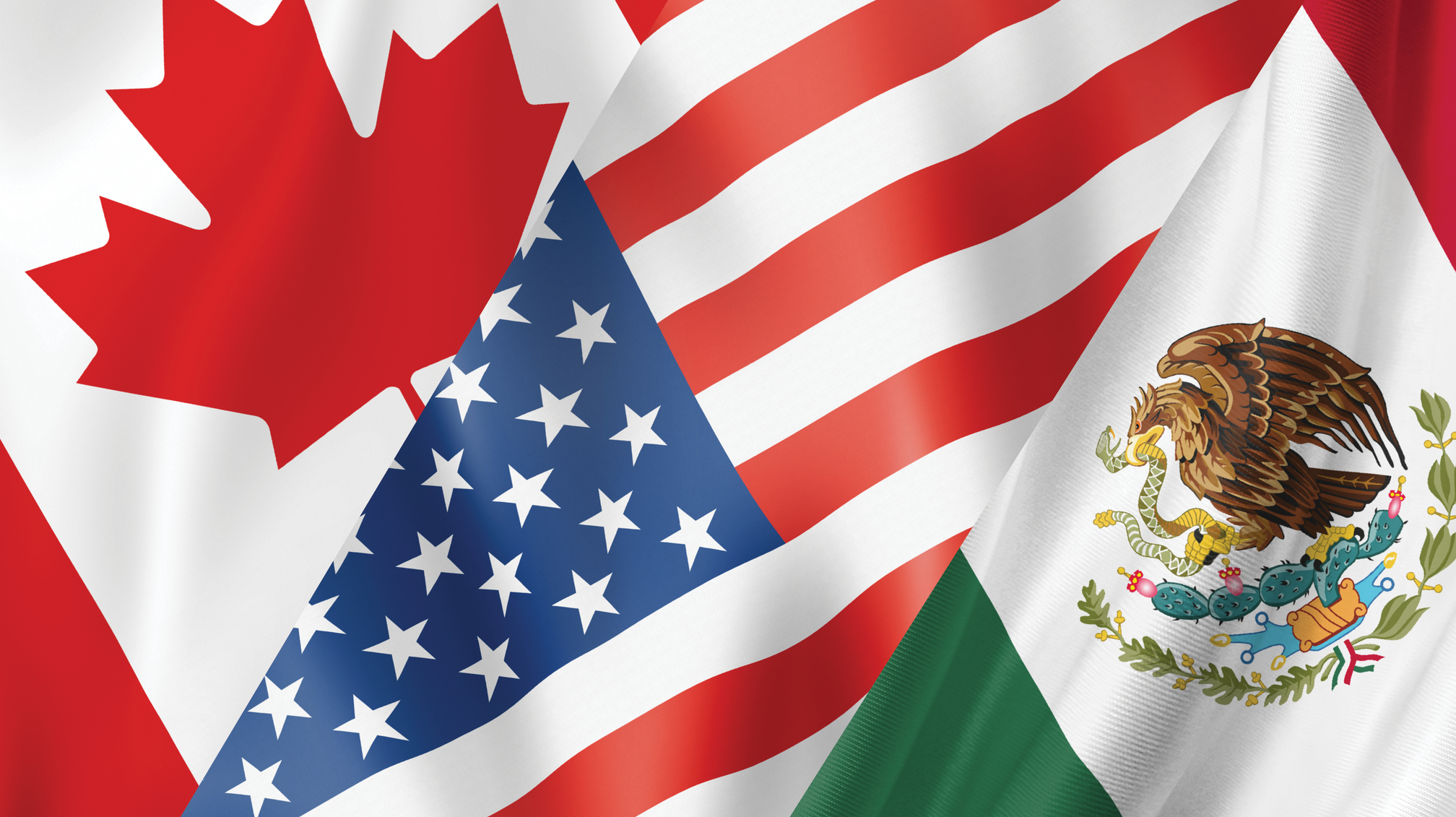
The U.S. Trade Representative (USTR) is beginning a public consultation process in advance of the 2027 annual joint review meeting of the U.S.-Mexico-Canada Agreement (USMCA).
As directed by Congress, USTR is seeking public comments on the operation of the agreement and providing notice of a public hearing.
Background
The USMCA entered into force on July 1, 2020, between the United States, Mexico, and Canada. The agreement must terminate 16 years after the date of entry into force—July 1, 2036—unless each party to the agreement confirms that it wishes to continue the agreement for a new 16-year term.
Pursuant to the USMCA, the Free Trade Commission, composed of the three parties, convened on July 1, 2026, to conduct the first joint review of the operation of the agreement.
At that meeting, the United States did not agree to extend the USMCA for a new 16-year term. As a result, the commission will meet annually to conduct a joint review until each of the three parties confirms its wish to extend the term of the agreement for another 16-year period or the term of the agreement expires, whichever is earlier.
Request for Public Comments
Interested persons must submit written comments using the docket titled “Request for Comments on the Operation of the Agreement between the United States of America, the United Mexican States, and Canada,” docket number USTR-2026-0595, using the USTR electronic portal by 11:59 p.m. EST on Jan. 12, 2027.
This notice invites comments regarding:
- Any aspect of the operation or implementation of the USMCA;
- Any issues of compliance with the USMCA;
- Recommendations for specific actions that USTR should propose ahead of the joint review;
- Factors affecting the investment climate in North America and in the territories of each party, as well as the effectiveness of the USMCA in promoting investment that strengthens U.S. competitiveness, productivity, and technological leadership; and
- Strategies for strengthening North American economic security and competitiveness and cooperation on issues related to nonmarket policies and practices of other countries.
USMCA Statistics
The United States, Canada and Mexico comprise more than 520 million people (6.3% of the world’s population), more than $33 trillion in gross domestic product (GDP) (nearly 30% of world GDP), and $1.8 trillion in goods and services trade (5.5% of $33 trillion in total global trade).
More than 13 million U.S. jobs depend on trade with Mexico and Canada. The USMCA provides duty-free access for nearly all goods traded among the three countries.
Total U.S. goods trade due to the USMCA is $1.601 trillion. The United States exports a total of $683.94 billion worth of goods to Mexico and Canada, including transportation equipment ($116.69 billion), computer and electronic products ($80.47 billion), chemicals ($69.03 billion), non-electrical machinery ($63.99 billion), and petroleum and coal products ($49.06 billion).
Total U.S. imports from Mexico and Canada of $917.41 billion include transportation equipment ($238.95 billion), oil and gas ($117.91 billion), computer and electronic products ($104.75 billion), electrical equipment, appliances and components ($54.13 billion), and non-electrical machinery ($52.51 billion).
CalChamber Position
CalChamber support for the USMCA is based on an assessment that it serves the employment, trading and environmental interests of California, the United States, Mexico and Canada, and is beneficial to the business community and society as a whole.
The objectives of the USMCA are to eliminate barriers to trade, promote conditions of fair competition, increase investment opportunities, provide adequate protection of intellectual property rights, establish effective procedures for implementing and applying the agreement and resolving disputes, and to further trilateral, regional and multilateral cooperation.
Visit the website of the Office of the U.S. Trade Representative to view the full text of the USMCA.
Author